A Windy Matchday, Planned Around What You Already Own
Plan a windy matchday with clothes and bags you already own, choosing useful layers and a lighter carry based on comfort and outing length.
A windy matchday is easier to manage when you choose layers for the route and the stand, not just the temperature at home. Start with the forecast for the venue, then check how your clothes fit together and what you can carry without fuss.
Check the forecast
Look at conditions for the venue and the hours you expect to be outside. A sheltered street can feel calm while an open stand or waterfront path feels exposed. Check wind direction, rain, temperature, and whether conditions may change during the game.
Read the venue’s entry guidance for bag rules and permitted items. Before leaving, check the forecast again. If rain or stronger gusts are expected, adjust what you wear or carry rather than automatically adding more clothing.
Choose familiar layers
Think in three roles: a base layer, a warm middle layer, and an outer layer that blocks wind. You may already have suitable pieces. A sweatshirt can work as a midlayer, while a close-fitting jacket may be more comfortable than a bulky coat that catches the breeze or restricts your arms.
Try the combination indoors. Raise your arms as if cheering, turn your shoulders, and check whether the hem lifts or the sleeves pull. Choose the outfit that lets you move comfortably while standing and sitting.
Closures should be easy to adjust. A zipper lets you vent heat while walking and close the jacket when you sit. A hood can help in wind or light rain, but make sure it does not block side vision or muffle nearby conversation.
Match warmth to the outing
Consider how long you will be outside and how much time you will spend sitting. Walking to the venue warms you differently from waiting in a queue or watching from a fixed seat. For a short outing with a sheltered wait, a light outer layer over a warm top may be enough. For a longer event in an open stand, a removable layer can help once you stop moving.
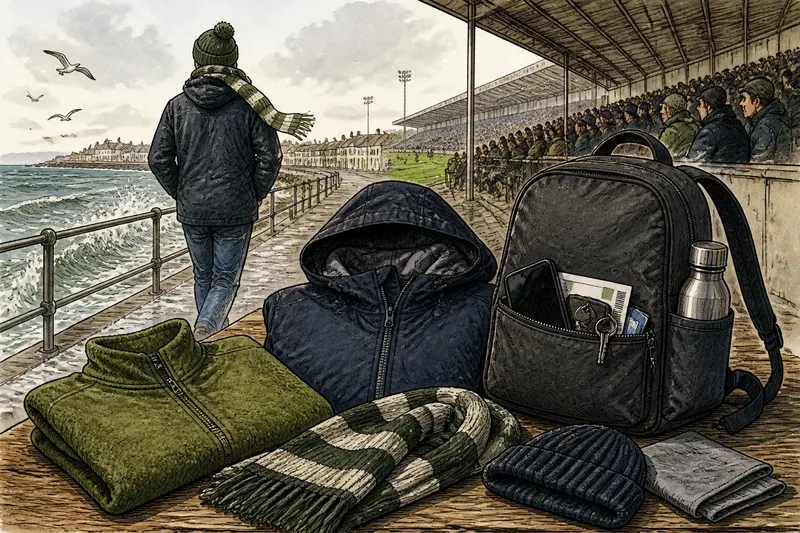
Say you are going to an afternoon game after a breezy waterfront walk. You have a fleece, a wind-resistant jacket, and a soft scarf. Wear the fleece under the jacket and put the scarf in your bag. If you feel chilly after sitting down, add it; if you stay comfortable, leave it packed.
Choose pieces you can manage without taking off several layers at once. A thin extra layer is often easier to store than a bulky coat, especially if your route includes a crowded bus or compact concourse.
Pick a manageable bag
Choose a bag you already own that feels comfortable in a crowd and meets the venue’s rules. A small backpack spreads weight across both shoulders. A crossbody bag keeps essentials close and easy to reach. A tote can suit a brief outing, but a gust may catch it, and carrying it can become tiring if you also have food or a drink.
Check the closures and pockets before packing. A zippered compartment can keep your ticket, phone, and keys together. A separate pocket can hold damp gloves or a folded scarf. If the bag does not close securely, carry only items you can keep under control in a crowd.
Pack for your plan
Put the essentials you expect to use in the bag first. Add an extra item only when it answers a specific need. Depending on the venue rules and your plans, useful items might include:
- Ticket or match pass: If you can reach it quickly, keep it in a secure pocket; if not, move it somewhere accessible before you leave.
- Phone and keys: If they fit in a zippered compartment, keep them there; if the bag lacks one, use a secure pocket in your clothing.
- Compact extra layer: If the forecast or a long spell of sitting could leave you cold, pack a scarf or thin hat; if not, leave it at home.
- Reusable water bottle: If the venue permits it and you expect to need water, bring it; if not, follow the venue’s posted rules.
- Small cloth: If you expect a damp seat or hands, pack one; if neither is likely, skip it.
- Rain jacket: If rain is forecast or your route is exposed, bring a comfortable jacket that fits over your layers; if the forecast is dry and your route is sheltered, leave it behind.
Remove duplicates and items without a clear purpose for this visit. Follow posted food and drink rules rather than relying on your usual routine. A bag with fewer loose items is easier to manage at the entrance and in your seat.
Before you leave?
What should I wear in a breeze?
Wear familiar layers that let you move: a warm middle layer under an outer layer that reduces the wind. Adjust them for the forecast and for the time you will spend walking or sitting.
Should I bring a rain jacket?
Bring one if rain is forecast or your route leaves you exposed, provided it fits comfortably over your other layers. If the weather looks dry and you will stay sheltered, leave it behind.
What bag works best for a match?
Choose a comfortable bag that closes securely and meets the venue’s entry rules. A small backpack or crossbody bag can keep essentials manageable, but a suitable bag you already own is enough.
How can I avoid carrying too much?
Pack for the forecast, the time outside, and the items you expect to use. If an item duplicates something already packed, leave it behind unless it serves a distinct purpose.
Make a final check
Before leaving, wear the full outfit and walk around with the packed bag. Check that the jacket closes over the midlayer, the pockets are not overfilled, and nothing swings or catches when you turn. Then check the forecast and venue guidance once more, changing your plan only if those details call for it.
For a windy matchday, begin with the clothes and bag you already own, then make one last decision based on the venue forecast and entry rules. That keeps the outfit comfortable and the bag manageable, while leaving you able to add or remove a layer if the stand feels different from the walk there.