The Seaside Pavilion and the Changing Shape of a Sporting Ground
A seaside pavilion helps spectators orient themselves, meet their group, and understand how a coastal sporting ground is organized before settling in.
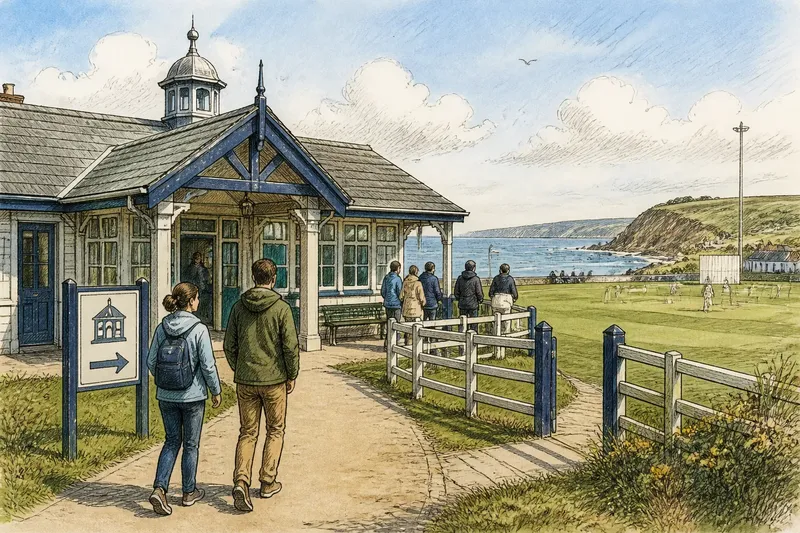
A seaside pavilion gives a coastal sporting ground a clear point of reference before the match begins. Its entrances, roofline, and relationship to the playing surface can help spectators understand how the venue is organized, even when the building is not the center of activity.
Seaside pavilion roles
A pavilion, playing surface, and surrounding landscape each shape the ground in a different way. The playing surface holds the contest. The landscape includes the shoreline, paths, open sky, and the edges of the site. The pavilion is a shared structure that can support arrival, gathering, and the practical routines around a match.
Its position also helps explain how people use the venue. A pavilion beside the main entrance may serve as an arrival point. One closer to a public path may make it easier for spectators to come and go. In either case, the structure helps connect the matchday routine to the wider coastal setting.
Follow matchday routines
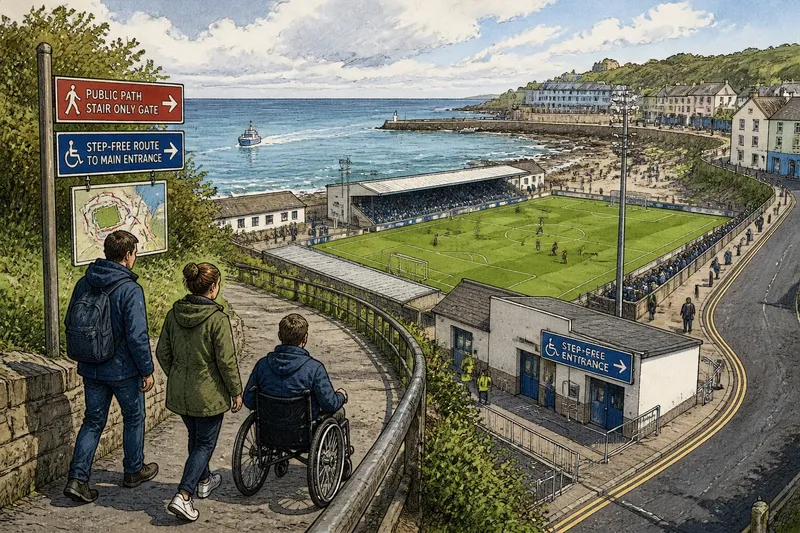
Look at the pavilion as part of the venue’s organization, not just as a backdrop. Signs, doors, and paths can indicate where spectators enter, where public facilities are located, and which areas have restricted access. These cues are useful, but appearance alone does not confirm that a door or room is open to the public.
When you arrive, check posted information and ask staff about entrances, accessible routes, public facilities, and any areas closed to spectators. This is especially useful at a local ground where matchday arrangements may differ from one event to another.
- If the main entrance is clearly marked: Use it to find the public route, then check signs for the next destination. If the route is unclear, ask staff rather than trying a side door.
- If a path appears to lead behind the pavilion: Follow it only when signs or staff indicate it is open to spectators. If access is uncertain, stay on the marked public route.
- If your group needs a meeting point: Choose a visible feature, such as the main entrance sign, and agree on the exact side of the building. If that area becomes crowded, choose another clearly visible public landmark.
- If someone needs an accessible route: Check venue information for the designated route and facilities. If details are missing, ask staff before moving through unfamiliar or uneven areas.
- If the pavilion is closed: Use a nearby public landmark that is easy to identify. If no suitable landmark is clear, arrange to meet at the venue entrance or another location staff recommend.
- If signs and the layout seem to conflict: Follow staff directions and posted access rules. If the discrepancy remains unclear, pause and ask before proceeding.
Say you arrive at an unfamiliar coastal ground with a friend, and the pavilion’s main entrance is marked but its side door has no sign. You agree to meet beside the entrance sign, follow the marked public path to the spectator area, and ask a staff member whether the side door is open. If it is staff-only, you avoid disrupting operations; if it is public, you can use it as directed. Either way, you have a clear meeting point and a confirmed route.
What do spectators ask?
Can the pavilion help you find your way?
Yes. Its shape and position can make it easier to describe where you are in relation to entrances, paths, and the playing surface. Use posted signs or staff directions to confirm which routes are public.
Does every pavilion serve the same purpose?
No. Some are used mainly for public gathering, while others also contain facilities or operational spaces. Check the venue’s signs and matchday information rather than assuming that every door or room is available.
Where should a group agree to meet?
Choose a specific, visible feature, such as a named entrance or a sign beside the public path. If that point is busy or inaccessible, select a second public landmark before separating.
What should you do if access is unclear?
Pause and check venue signs or ask staff. Do not treat an open-looking doorway or path as public access without confirmation.
Read the site layout
The building’s relationship to paths and entrances can reveal how it fits into matchday circulation. A path that leads directly to a marked entrance may be the usual public approach. A separate gate or side route may be reserved for staff, players, or deliveries, so follow posted instructions rather than guessing.
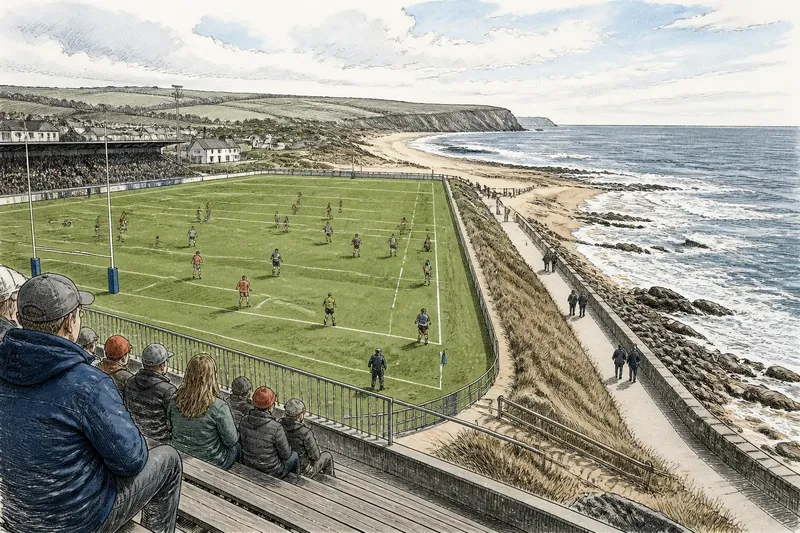
Notice the distinction between the pavilion and the site’s natural edges. A shoreline, embankment, or open stretch of ground can look like a boundary, but venue rules determine where spectators may go. Stay within marked public areas, particularly where the ground meets paths or coastal terrain.
Plan a smooth visit
On arrival, identify the public entrance, check the venue’s signs, and note a clear meeting point. If you need a particular facility or accessible route, confirm its location with staff. These small decisions make it easier to move around the ground without treating the pavilion as a guide to areas it may not serve.
A seaside pavilion is most useful when you understand its practical role in the venue: a recognizable structure that can organize arrival and gathering. For a seaside pavilion sporting ground, confirm public access and follow the matchday directions on site; that leaves you free to focus on the contest and the coastal surroundings.